
Role-Based Access Control (RBAC) Design and Implementation
Problem
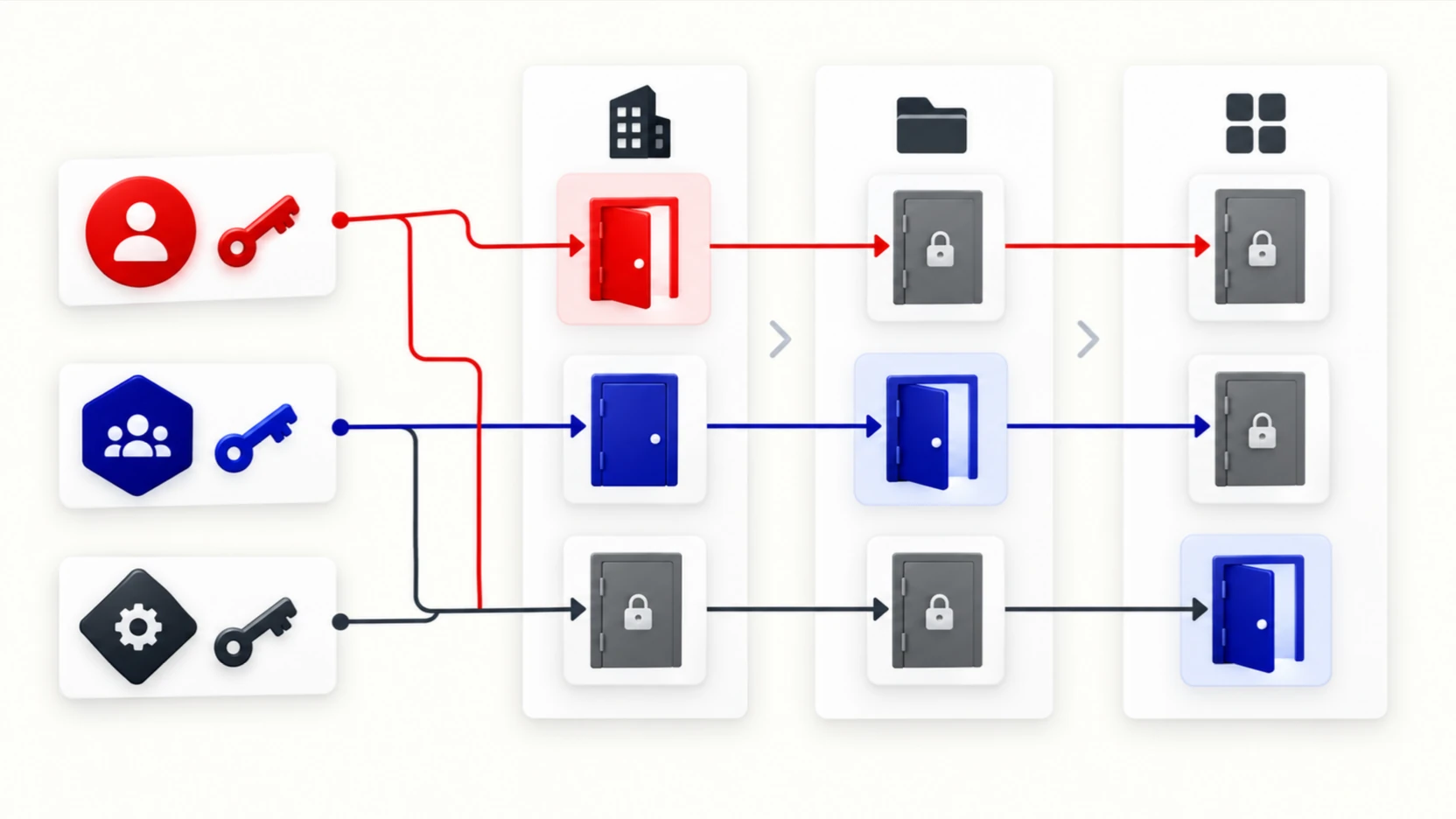
A SaaS platform faced critical challenges in its access control mechanisms, which lacked the granularity to define and enforce specific user permissions. This limitation made it difficult to manage roles effectively across organizational hierarchies, including organizations, projects, and applications. These challenges not only introduced potential security vulnerabilities but also complicated administrative workflows.
Also applicable to
- Cloud-based SaaS Platforms: Where multi-tenant environments demand robust role and permission management.
- Identity and Access Management (IAM): Systems requiring advanced role-based configurations for secure and scalable access control.
- Regulated Industries (e.g., Healthcare, Finance): Applications where granular access control is critical for compliance with strict data governance and security standards.
- Enterprise Applications: Platforms that support hierarchical user structures across varied organizational levels.
Solution
Leveraging extensive experience in AI and software development, our team drew from relevant expertise to design and implement a sophisticated Role-Based Access Control (RBAC) system tailored to address these challenges. The solution focused on introducing fine-grained permissions across multiple resource levels, ensuring secure and efficient access management.
Key highlights:
- Collaborative Requirements Gathering: Partnered with stakeholders to define complex role and permission hierarchies, aligning with organizational needs and data governance best practices.
- RBAC Model Design: Developed a scalable RBAC model that integrated seamlessly into existing AI-driven authentication and authorization workflows.
- Backend Development: Implemented backend logic for secure role and permission management, including APIs for role assignment, validation, and administration.
- Emphasis on Responsible AI: Ensured compliance with security best practices to mitigate risks such as privilege escalation and unauthorized access.
Impact
- Enhanced Security: Strengthened platform security by enabling precise access control over sensitive resources.
- Administrative Efficiency: Simplified permission management, improving productivity for administrators and IT teams.
- Enterprise Adoption: Boosted adoption among enterprise users by offering advanced, scalable access control features that meet organizational and regulatory requirements.
- Operational Scalability: Positioned the platform as a competitive, secure SaaS solution, addressing diverse needs in cloud-based operations.
Technologies
- Programming Language: Golang
- Database: PostgreSQL
- Communication Framework: gRPC
- Authentication Mechanism: JWT (JSON Web Tokens)
This project underscores the depth of our team’s expertise in identity management and AI software development. By combining practical experience with a focus on delivering ROI-driven results, we help businesses navigate challenges and implement high-impact solutions. Our work exemplifies a commitment to scalable, secure, and responsible AI solutions that reduce costs, save time, and ensure quality.

Sr. Engineering Leader with 15+ years of experience. Ex-ApplyBoard. AWS Certified Solutions Architect.

Known professionally as Dr. Med with 12+ years of experience implementing AI products. Strategic advisor to multiple successful founders including a unicorn, US patent holder. Ex-SOTI, UC Berkeley PhD.