
A new browser war is brewing but this time, it’s powered by AI
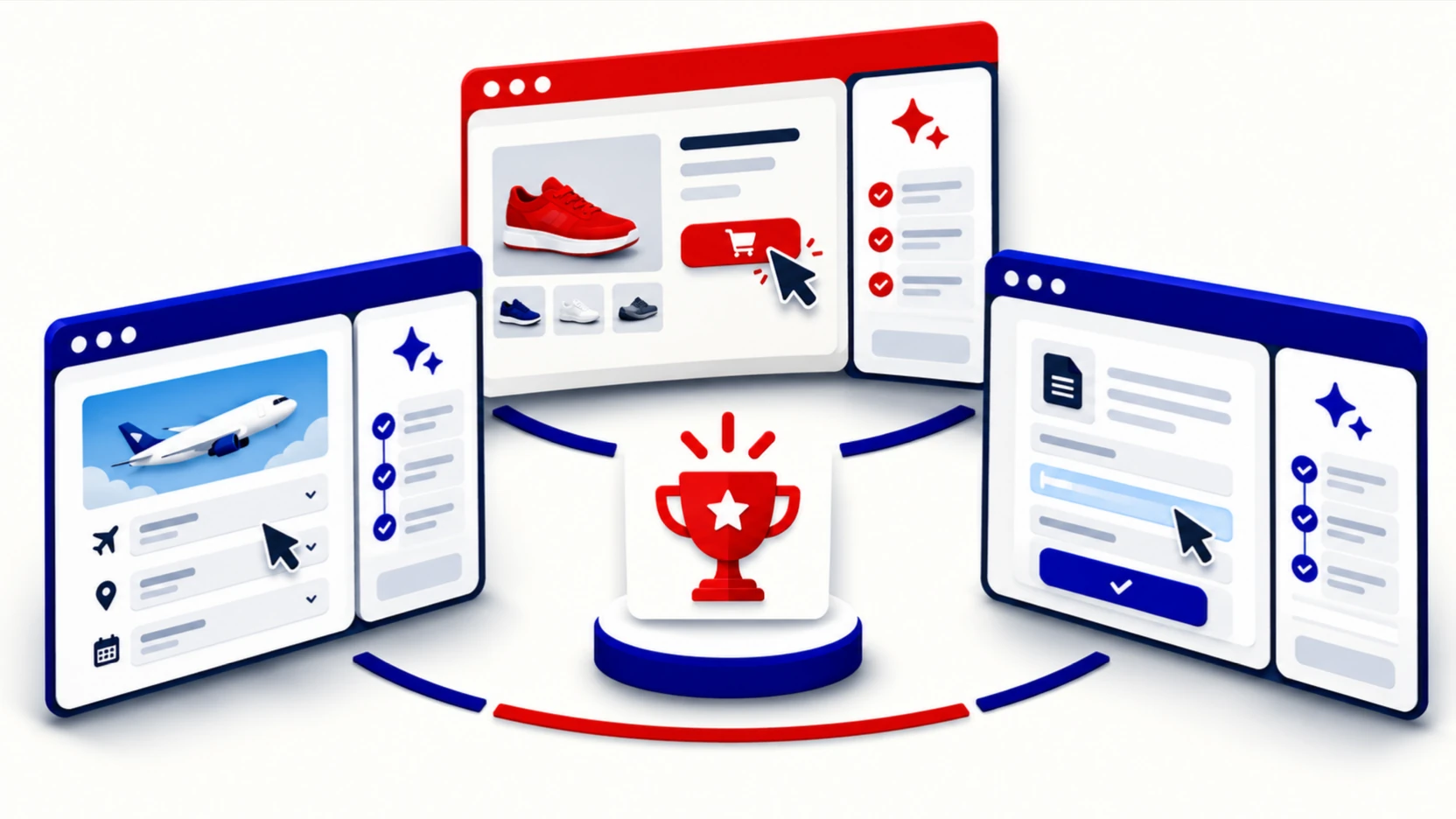
OpenAI just launched ChatGPT Atlas, a web browser with its AI assistant built in. In Atlas, you can chat with the AI about any website you visit, and even have it perform actions like clicking links or filling your shopping cart online. Atlas is widely framed as a serious challenge to Chrome’s dominance and to how people find and act on information online.
It does feel like the browser wars again, only now they’re AI-fueled. Startups and incumbents are moving fast: Perplexity’s Comet, The Browser Company’s Dia, and Chrome with Gemini built in, to name a few. Why the frenzy? The classic loop (type keywords → click links) assumed we had to approximate user intent. AI assistants increasingly infer intent directly because we tell them exactly what we want in plain language, instead of short phrases and keywords, which turns browsers into agentic interfaces. Even tools like Microsoft Clarity (free behavior analytics) underscore the deeper race for first-party behavioral and contextual data. Whoever controls the AI-first browser + assistant layer will influence not just how we browse, but how we buy, learn, and decide.
For businesses, that means SEO and GEO (Generative Engine Optimization) will coexist, but the mix is shifting (see AI Overview and AI Mode in Google’s results page). Create content and experiences AIs can read, reason with, and confidently surface, while instrumenting your sites, apps, and products for privacy-safe, first-party insights. (Note that AI-powered tools are still prone to direct and indirect prompt injection, and the design and implementation of them require deep expertise and experience to ensure improved ROI while managing risk.)
The bigger play is higher in the stack, where discovery, ads, and behavior data intersect, and where AI is starting to mediate every interaction. The organizations that stay curious, experiment early, and invest in AI literacy will adapt fastest to this new browsing era, which is exactly the mindset we, at Elementera AI, champion every day.
Do you think AI browsers will reshape how we search and learn online?

Known professionally as Dr. Med with 12+ years of experience implementing AI products. Strategic advisor to multiple successful founders including a unicorn, US patent holder. Ex-SOTI, UC Berkeley PhD.

Ex-Microsoft. 10+ years of experience in AI/ML, MSc from Université de Montréal (Mila). US patent holder.
Related articles
- Google Preferred Sources and AEO: what it is and how it affects your AI visibility
- What You Might Have Missed From Google I/O 2026 (And Why It Matters for AEO and AI Search)
- Google has removed FAQ rich results
- Introducing CAILIN: The Corporate AI Literacy Index by Elementera
- OpenAI × Broadcom: From Sand to Intelligence
Latest articles
- Dental Practice Software in 2026: A Practical Guide to PMS Platforms and AI Tools (US and Canada)
- What an AI Visibility Audit Actually Covers for SMBs
- Inside Google’s First Year of AI Mode: What 1 Billion Users Reveal About How Americans Search Now
- What Is llms.txt and How to Implement It for AI Bots (2026 Guide)
- What We Know About Paid Ads in AI: A Practical, Evidence-Based Guide for 2026