
How to read Bing's AI Performance report: a worked example with our own Copilot citations
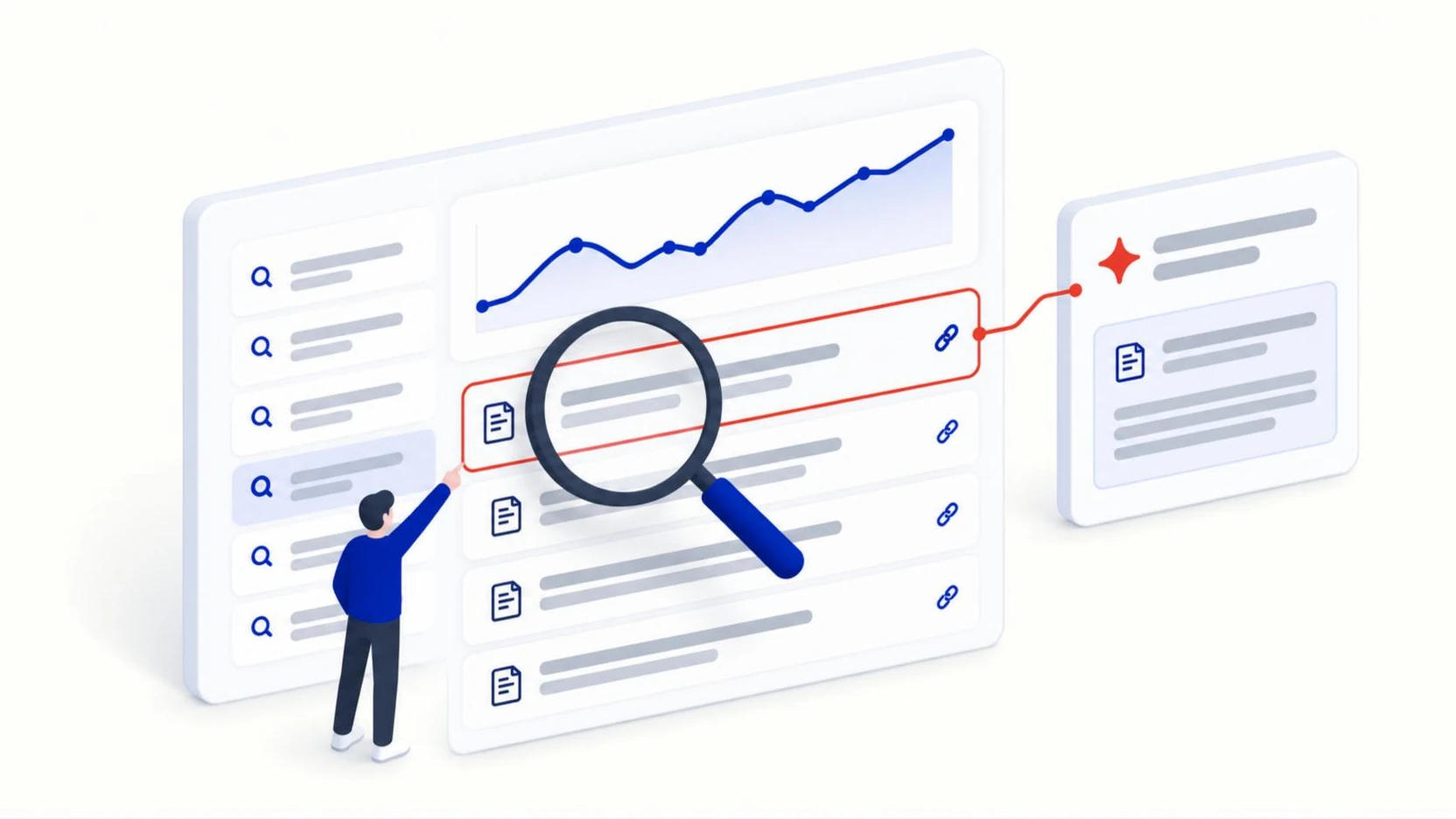
Key point. Bing Webmaster Tools' AI Performance report counts how often Microsoft's AI experiences, including Copilot, cite your pages, and lists a sample of the searches the AI ran before citing you. Here we read our own report for elementera.com, March 8 to September 6, 2026, line by line.
This report is easy to miss. It is the only place where Microsoft counts citations of your pages in its AI answers, and it is free. Below we show what ours says, how to read each part, and what we changed because of it. Every number here comes from our own site's export, so you can see exactly what the report gives you.
How do I read the AI Performance report at a glance?
Read the AI Performance report with five rules, one per part of the report:
| What you read | Where it is | How to read it |
|---|---|---|
| Citations | Overview | Compare months or weeks, never two days: daily counts are noisy. |
| Grounding queries | Grounding queries table | A sample, not every search. Group rewordings of one question before you rank them. |
| Citation share | Next to each grounding query | Read it with the count: a large count with a small share is a crowded query. |
| Queries that name you | Grounding queries table | Answer each one on one plain page of your site. |
| Clicks | Not in the report | Pair the report with your own analytics. |
What is the AI Performance report?
It is a report in Bing Webmaster Tools, and the first report to open for Copilot SEO and Bing AI visibility. Microsoft launched it as a public preview on February 10, 2026. Microsoft says it "shows how publisher content appears across Microsoft Copilot, AI-generated summaries in Bing, and select partner integrations" (Microsoft).
It has three main parts, in Microsoft's words:
- Citations: "the total number of citations that are displayed as sources in AI-generated answers during the selected time frame."
- Cited pages: "the average number of unique pages from your site that are displayed as sources", with counts for each URL.
- Grounding queries: "the key phrases the AI used when retrieving content that was referenced in AI-generated answers." Microsoft adds that this data "represents a sample of overall citation activity."
On June 16, 2026 Microsoft added four views (Microsoft): Intents (each grounding query classed as, for example, informational, commercial or navigational), Topics (related queries grouped into themes), Citation Share ("the percentage of citations attributed to your site out of all citations shown across all sites" for a query) and Compare (an earlier period laid over the current one).
Because the report covers Copilot, Bing's AI summaries and partner products together, we write "Microsoft's AI experiences", not "Copilot", when we describe our own numbers.
What does our report show overall?
Our export covers March 8 to September 6, 2026. In one sentence: "Microsoft's AI Performance report counted 5,260 citations of our site in Microsoft's AI experiences between March 8 and September 6, 2026, rising from about 3 a day in March to about 63 a day in August. Its grounding-query report listed 73 searches Microsoft's AI ran when it cited us; ten were rewordings of one question."
By month, our Bing Webmaster Tools AI Performance report shows these citations of our site (March 8 to September 6, 2026):
| Month (2026) | Days in the export | Citations counted |
|---|---|---|
| March (from March 8) | 24 | 74 |
| April | 30 | 79 |
| May | 31 | 616 |
| June | 30 | 665 |
| July | 31 | 1,420 |
| August | 31 | 1,940 |
| September 1 to 6 | 6 | 466 |
| Total | 183 | 5,260 |
Our Bing AI Performance report shows the single highest day as September 3, 2026, with 359 citations across 22 cited pages.
Two reading rules for that table. First, our site grew over these months, with new pages added, so a rising line describes our site changing as well as Microsoft's AI choosing it. Second, daily counts are noisy: "Day to day, the number of citations Microsoft's AI Performance report counted for our site moved by a median of about two-thirds (150 pairs of consecutive days), while the monthly total rose from 74 in March to 1,940 in August." Compare months or weeks, never two days.
What searches did Microsoft's AI run before citing us?
The grounding-query table lists the searches behind the citations, with the citations each one produced and our citation share. The export, downloaded September 7, 2026, lists 73; we show 69, leaving out four on a topic outside this post. Here are the twelve with the most citations, as our Bing AI Performance report shows them for March 8 to September 6, 2026:
| Grounding query (as Microsoft lists it) | Intent | Topic | Citations | Citation share |
|---|---|---|---|---|
| understanding prompting patterns improve AEO strategy | Research | SEO & Search Optimization | 988 | 4.21% |
| query intent meaning importance AEO strategy | Research | Marketing & Advertising | 445 | 19.99% |
| understanding prompting patterns improve Answer Engine Optimization AEO strategy | Research | SEO & Search Optimization | 190 | 10.99% |
| query intent importance AEO strategy | Research | Marketing & Advertising | 162 | 18.51% |
| prompting patterns improve Answer Engine Optimization AEO strategy | Research | SEO & Search Optimization | 157 | 12.31% |
| best AEO concepts strategy homepage schema company | Others | SEO & Search Optimization | 152 | 3.78% |
| structured data support AEO strategy | Research | SEO & Search Optimization | 143 | 14.61% |
| understanding prompting patterns improves AEO strategy | Research | SEO & Search Optimization | 135 | 3.15% |
| best AEO concepts strategy homepage schema | Research | UX/UI Design | 72 | 10.00% |
| query intent in AEO strategy | Research | Marketing & Advertising | 56 | 7.01% |
| evaluate feasibility ROI AI solutions business | Research | AI Tools & Platforms | 54 | 25.23% |
| SEO strategies to optimize brand for answer engine visibility | Learn and Solve | SEO & Search Optimization | 40 | 2.65% |
The citations in this table add up to fewer than the 5,260 in the overview: our Bing AI Performance report shows the 69 queries accounting for 3,420 (March 8 to September 6, 2026). That fits Microsoft's note that grounding queries are a sample.
How do you read grounding queries?
Read them as the short searches an AI ran to answer a longer question, not as what a person typed. Three things stand out in ours.
One question, many searches. Ten of the queries are rewordings of one question about prompting patterns and AEO strategy, and together they account for 1,577 citations in our Bing AI Performance report for March 8 to September 6, 2026. This is query fan-out seen from the publisher's side: the AI turned one question into several short searches. Group rewordings before you rank queries, or one question will look like ten.
What you are cited for. "When Microsoft's AI cited our pages, 4 of the 73 searches it ran used the GEO paper's own method names, such as 'quotations statistics'." That describes what our site is cited for, not which term the market uses.
Citation share is per query. A large count with a small share, such as 988 citations at 4.21%, means the query produced many citations across many sites and ours was a small part. A small count with a large share means few citations, mostly ours. Read the two columns together.
Which grounding queries named our own company?
Our Bing AI Performance report for March 8 to September 6, 2026 shows eight of the 69 grounding queries naming our domain or our company, and seven of them carry no intent or topic label. Here they are as listed:
| Grounding query (as Microsoft lists it) | Citations | Citation share |
|---|---|---|
| elementera.com AI demand suitability | 34 | 73.91% |
| elementera.com Control and Timing suitability | 31 | 68.89% |
| elementera.com security privacy concerns | 30 | 54.55% |
| elementera.com technical complexity limitations | 12 | 19.05% |
| Elementera evolving landscape criticism reasons | 8 | 16.33% |
| elementera.com code bloat suitability | 8 | 11.11% |
| elementera.com ROI Uncertainty suitability | 6 | 11.54% |
| Elementera top brand attributes | 6 | 46.15% |
We do not know the questions behind these searches; the report does not show them. What we did with them is simple: we wrote a page that answers each one directly, in plain words, so that when Microsoft's AI searches for them it finds our own answer. That page is Security, data and fit.
How do you read your own AI Performance report?
You can repeat this reading for your site in under an hour.
- Verify your site in Bing Webmaster Tools; you can import sites from Google Search Console.
- Open AI Performance and set the widest date range available.
- Export the overview and the grounding-query table.
- Total the citations by month, and note when you added or changed pages.
- Group grounding queries that are rewordings of one question, then rank the groups.
- Read citation share next to the count for each query.
- Find the queries that name your company, and check that a page on your site answers each one plainly.
- Repeat every month, comparing months, never single days.
Frequently asked questions
Does the AI Performance report show Copilot clicks?
No. It counts citations, cited pages and a sample of grounding queries. It does not report clicks or traffic from Microsoft's AI answers, so pair it with your own analytics.
Is the report only about Copilot?
No. Microsoft says it covers Microsoft Copilot, AI-generated summaries in Bing and select partner integrations, reported together.
Are grounding queries what users typed?
Not necessarily. Microsoft describes them as the key phrases the AI used when retrieving content. Several grounding queries can come from one user question.
What to do next
- Open the AI Performance report for your site and export the last full months.
- Group grounding-query rewordings and find the questions behind your largest groups.
- Answer every grounding query that names your company on one plain page.
Work with us
If you want a team to read these reports and act on them across every engine your buyers use, our managed AEO services do that work with you: Book a call. If you would rather see where you stand first, Lenz gives you a free analysis of how ChatGPT and Gemini answer your buyers' questions: Get your free AI visibility report.
See also how Microsoft Copilot finds sources and how we measure AI visibility across ChatGPT, Gemini and AI Overviews.
Sources
| Source | What it supports on this page | Published | Read |
|---|---|---|---|
| Microsoft Bing, Introducing AI Performance in Bing Webmaster Tools Public Preview | what the report covers, the three parts in Microsoft's words, the sample note | February 10, 2026 | October 22, 2026 |
| Microsoft Bing, New AI Visibility Insights in Bing Webmaster Tools: Intents, Topics, Citation Share, Compare | the four views added in June, the citation share definition | June 16, 2026 | October 22, 2026 |
| Elementera, Bing Webmaster Tools AI Performance export for elementera.com | every count from our own report, March 8 to September 6, 2026 | downloaded September 7, 2026 | September 7, 2026 |

Sr. Engineering Leader with 15+ years of experience. Ex-ApplyBoard. AWS Certified Solutions Architect.

Known professionally as Dr. Med with 12+ years of experience implementing AI products. Strategic advisor to multiple successful founders including a unicorn, US patent holder. Ex-SOTI, UC Berkeley PhD.
Related articles
- Why ranking well on Google does not mean AI Overviews read your page
- How Microsoft Copilot finds and cites sources, and what a site owner controls
- How we measure AI visibility in ChatGPT, Gemini and AI Overviews
- Converting visitors who arrive from AI answers
- The AI due-diligence check: what AI tells a buyer who asks whether to hire you
Latest articles
- GEO services vs AEO services: is there a difference, and what should you ask a provider?
- Managed AEO services or AEO software: which does your company need?
- Being recommended over competitors: why AI knows your company and still recommends someone else
- AEO From Zero for a B2B SaaS: The Order We Would Follow
- Zero-click: when the AI answer replaces the visit