
Why Choose Answer Engine Optimization (AEO) for AI Search Optimization Over Traditional SEO?
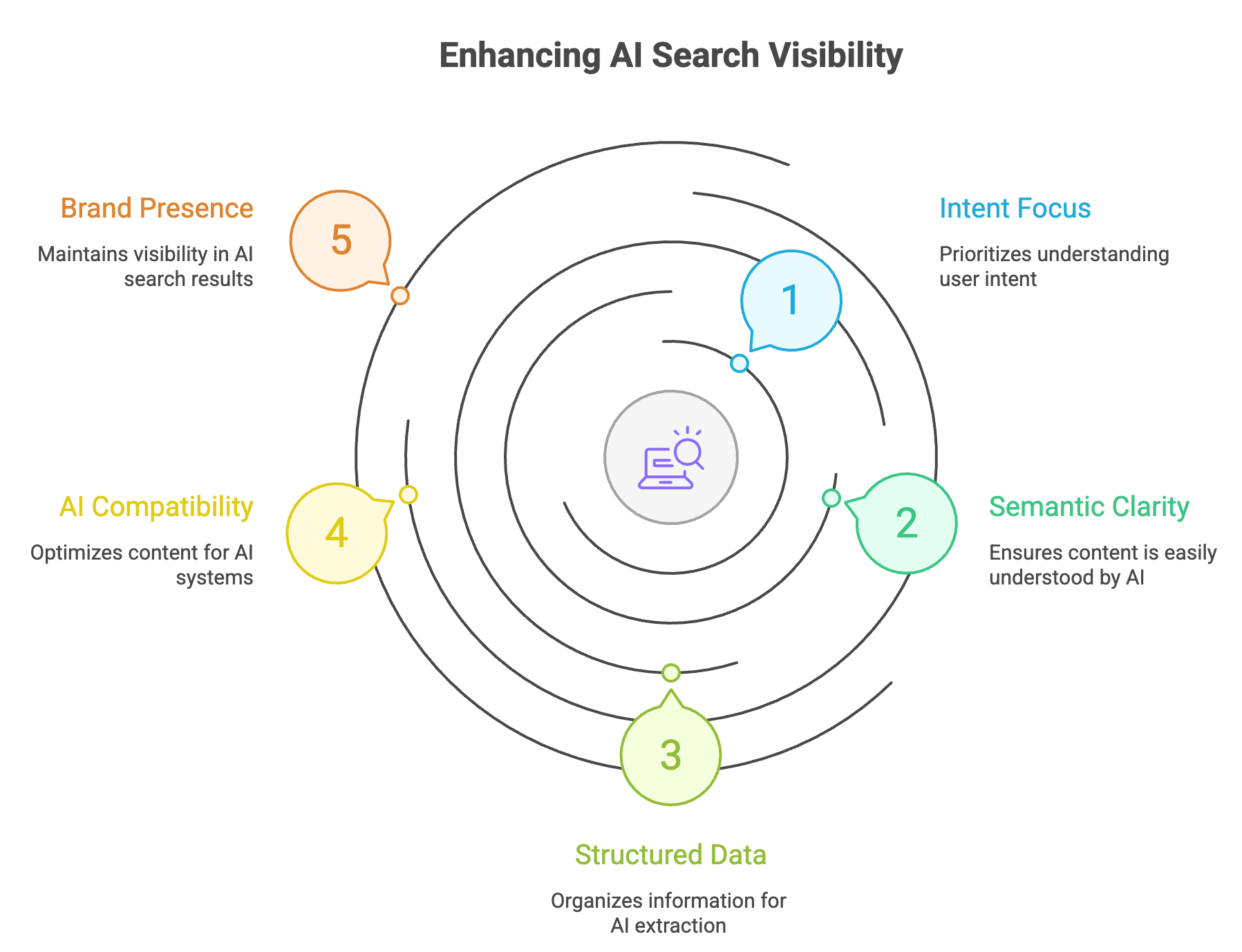
AEO vs SEO: which is right for your business? Traditional SEO (Search Engine Optimization) increasingly misses how AI search surfaces direct answers. AEO (Answer Engine Optimization), similar to GEO (Generative Engine Optimization), AIO (AI Optimization), LLMO (Large Language Model Optimization), and AI-SEO (AI Search Optimization), aligns content and your brand's online presence to semantic processing and user intent so AI systems can extract and present answers. This article contrasts AEO with conventional SEO, summarizes business benefits, and outlines practical implementation steps for organizations moving toward conversational AI.
With the rise of LLMs (e.g., ChatGPT and Gemini) and the push by Google and Bing to include AI Overview (or AI Mode) in Google and Bing SERPs (Search Engine Results Page), AI-powered answer engines surface direct answers in search interfaces, which reduces click-through rates for organic listings and at the same time they offer a great tool for brand visibility and authority.
AI-Powered Answer Engines: Diminishing Traditional SEO Effectiveness
The proliferation of AI-powered answer engines is diminishing the effectiveness of traditional SEO strategies, particularly in searches where users obtain answers directly from SERPs, leading to reduced click-through rates. This shift necessitates a re-evaluation of optimization tactics, as search engines prioritize direct, AI-powered answers over organic listings. The impact of AI-powered search on SEO: the emergence of answer engine optimization, Sharma & Dhiman, 2025
Key Takeaways
- AEO improves visibility in AI-driven search by focusing on intent and semantic clarity.
- It shifts emphasis from keyword density and backlinks to structured, extractable content.
- AI answer engines can reduce traditional SEO effectiveness by providing direct answers.
- At the technical level, structured data and semantic mapping increase the chance of selection by AI systems.
- At the strategy level, brand authority and trust signals from across the web determine whether your brand will be recommended and what the sentiment is.
- Engines such as OpenAI's ChatGPT, Gemini, Google Search, Perplexity, and Anthropic's Claude respond well to AEO signals.
- Adopt AEO through AI visibility audits and semantic optimization to retain brand presence through AI citations.
What Is Answer Engine Optimization and How Does It Differ from Traditional SEO?
AEO is the practice of authoring and structuring content (on-site and off-site) so AI-driven systems can reliably extract and present answers. Unlike traditional SEO, which centers on keywords and backlinks, AEO prioritises semantic relevance, clear structure, and explicit signals of intent. The result is content designed for machine interpretation and conversational delivery rather than only rank-based positioning. The prerequisite for this step is Technical AEO akin to Technical SEO to ensure the optimized content is accessible and digestable by AI crawlers.
Integrating large language models into search has produced related approaches such as Generative Engine Optimization (GEO), which shares many AEO principles. However, note that the goal for all of these methods is still providing genuinely helpful content for human
Generative Engine Optimization: AI Overviews & New SEO Strategies
The integration of large language models (LLMs) into search engines has driven the emergence of AI Overviews, AI-generated summaries that provide immediate answers within SERPs. These new features represent a paradigm shift from traditional organic search (SEO). Within this context, Generative Engine Optimization (GEO) has emerged, referring to strategies to optimize content for selection by AI systems. In contrast to conventional SEO, GEO emphasizes semantic relevance, content quality, E-E-A-T, clear structure for AI extraction, structured data, and optimization for conversational queries. Generative Engine Optimization: How Search Engines Integrate AI-Generated Content into Conventional Queries, Rejón-Guardia et al., 2025
How Does Answer Engine Optimization Enhance AI Content Visibility?
AEO boosts AI visibility by formatting answers for reliable extraction: clear headings, concise answer passages, semantic signals, and structured data. Content that directly matches user intent and follows predictable, machine-friendly patterns has a higher chance of appearing in answer boxes, AI summaries, and other prominent placements.
Which AI Engines Support Answer Engine Optimization?
Many engines prioritize content optimized for AEO; selection methods differ but the signal profile is similar. Representative engines include:
- OpenAI ChatGPT: Conversational NLP (Natural Language Processing) that rewards clear, answer-focused content.
- Google Gemini: Aggregates sources for comprehensive responses.
- Google Search: Uses intent-driven ranking and SGE (Search Generative Experience) features.
- Perplexity: Favors concise, evidence-backed answers.
- Anthropic Claude: Emphasizes contextual relevance and engagement.
What Are the Roles of ChatGPT, Gemini, Google Search, Perplexity, and Claude in AI Search?
Together these engines set selection criteria AEO must meet: conversational fluency (ChatGPT), multi-source synthesis (Gemini), intent alignment and structured signals (Google Search), brevity and relevance (Perplexity), and contextual depth (Claude). Optimizing for these capabilities improves the chance of appearing in AI-driven results.
Why Should Businesses Prioritize Answer Engine Optimization for Conversational AI SEO?
Conversational AI changes discovery: users increasingly receive answers directly in interfaces. AEO preserves brand visibility in those scenarios by making content extractable and trustable. Over time, AEO helps capture value from AI-first channels through better placement, higher-quality engagement, and improved task completion for users.
Elementera experts provides research and implementation services to help organizations adapt content and systems for AI-driven answer environments, combining AI expertise with practical optimization workflows.
How Does Answer Engine Optimization Improve Brand Visibility in AI Ecosystems?
AEO improves visibility by making content machine-interpretable and semantically precise. Clear structure, explicit intent signals, and correct structured data increase selection probability for high-visibility placements, driving discovery and engagement while complementing traditional SEO.
Genuinely helpful answer-centered architectures and shifts in user behavior place structured data and semantic clarity at the centre of visibility strategies in SGE environments.
AEO & Generative AI: Reshaping Search Visibility with Structured Data
Answer-centered architectures and changes in user information acquisition reshape visibility strategies, necessitating a shift from traditional SEO paradigms. This transformation further clarifies how structured data is implemented and interpreted in Search Generative Experience (SGE) environments, emphasizing the importance of semantic understanding. From SEO to Answer Engine Optimization (AEO): Generative Ai and the Transformation of Search Visibility
, H Karamuk, 2025
How Can Businesses Implement Answer Engine Optimization Effectively?
The shift should originate at the organization and strategy level when it comes to marketing. It is noteworthy that the focus should change from research, ranking, and tracking on keywords to prompts and queries with clear and concise answers.
The Effective AEO requires organizational readiness and writing for AI extraction. Equip teams with semantic-search literacy, update content templates for machine readability, and measure placements in AI-driven features.
- Conducting an AI Visibility Audit: Map current content to AEO opportunities.
- Optimizing Content for AI: Reformat and clarify answers; use headings and brief answer blocks.
- Leveraging Semantic Search Techniques: Apply semantic mapping and structured data to surface key facts.
- Ensuring Machine Access: Optimized content should be reachable and readable by AI crawlers in their preferred format.
How do content strategies need to adapt for generative AI search results?
Content strategies need to move from "rank for keywords" toward "be the best source for a specific answer." That means covering topics more completely, showing expertise clearly, answering follow-up questions, structuring pages so key facts are easy to extract, and building trust signals that make your content more cite-worthy. Google’s guidance also emphasizes helpful, reliable content rather than content made mainly to manipulate rankings.
What Are the Key Steps to Transition from Traditional SEO to Semantic Search Optimization?
Transition in deliberate stages: learn how target AI systems process content, audit existing materials for extractability, and revise content to prioritise semantic clarity and intent alignment.
- Understanding AI Systems: Study selection signals and output formats.
- Conducting an AI Visibility Audit: Identify pages likely to be reused by AI answers.
- Optimizing Content for AI: Convert long prose into clear, answer-focused blocks and add structured markup.
Consistent application of these steps keeps organizations competitive as search technology evolves.
Different optimization strategies produce specific effects through defined mechanisms.
StrategyMechanismBenefitImpact LevelSemantic MappingAligns content with user intentImproved AI understandingHighStructured DataEnhances content clarityBetter indexing by AIMediumUser Engagement TechniquesIncreases interaction ratesHigher visibility in search resultsHigh
The table summarizes how AEO methods improve AI comprehension and, in turn, brand visibility and engagement.
To assess the priority of each strategy you can use a value-feasibility framework for maximum AEO impact. To enhance security and control over sensitive data, implement role-based access control (RBAC). RBAC limits changes to authorized personnel and reduces breach risk.
Frequently Asked Questions
Is investing in AEO or SEO more cost-effective for startups?
For most startups, the most cost-effective approach is not AEO instead of SEO, but SEO along with AEO layered on top. Traditional SEO still helps with indexing, technical health, and long-term organic discovery, while AEO helps your content get surfaced in AI-driven experiences like Google AI Overviews and other answer engines. If your buyers research through AI tools or ask long, specific questions, AEO can produce faster visibility gains for high-intent informational queries.
Are there services that focus on AEO instead of SEO for e-commerce sites?
Yes. A growing number of agencies and software platforms now focus specifically on AEO or GEO for AI search visibility, including citation tracking, entity optimization, structured content, and monitoring how brands appear in AI-generated answers. However, most (if not all) of them do not have machine learning and AI expertise as Elementera. Our team of experts has been working on and developing AI models when AI was not as well-known as it is now. We have an academic and practical AI-first focus on AEO.
For e-commerce sites, this usually works best as an extension of SEO, not a replacement for it, because product pages still need strong crawlability, indexing, and technical SEO foundations.
What are the best practices for structuring content to be picked up by answer engines?
The strongest approach is to create clear, directly answerable, people-first content. Use descriptive headings, short sections, concise answers near the top of the page, strong internal organization, and schema where relevant. Google also recommends focusing on helpful, reliable, people-first content, and notes that AI features in Search follow normal Search technical requirements. FAQ structured data can help search engines understand question-and-answer content, although it does not guarantee special treatment.
Can AEO improve search rankings better than traditional SEO methods?
Not exactly in the traditional sense. AEO is less about improving blue-link rankings and more about improving the chances that your brand or content is used, cited, or referenced in AI-generated answers. Research on GEO suggests that content adjustments for generative engines can materially improve visibility in AI responses, but this is different from saying AEO always beats SEO in standard rankings. In practice, the best results usually come from combining both.
How does AEO compare to SEO in driving website traffic?
SEO still tends to be stronger for driving direct website traffic because it is built around clicks from search results. AEO can improve brand visibility and citations inside AI-generated answers, but those experiences may lead to fewer clicks than classic search listings. Recent studies found that Google AI Overviews were associated with significant CTR declines for top-ranking informational content, which means AEO may be essential for visibility even when it does not produce the same click volume as traditional SEO.
What are the main challenges businesses face when transitioning to Answer Engine Optimization?
Challenges include organizational change, technical investment (formats, markup), and adapting measurement as traditional SEO metrics may not fully capture AI placements.
How can businesses measure the success of their AEO efforts?
Track AI placements (featured answers, SGE features), CTR from AI responses, and engagement metrics (time on page, conversions) to assess impact.
What role does structured data play in Answer Engine Optimization?
Structured data supplies explicit semantic signals that help AI reliably interpret and extract key information for answer boxes and summaries.
Can AEO strategies be integrated with traditional SEO practices?
Yes. Combine AEO (for extractability) with keyword and backlink work (for discoverability) to build a resilient visibility strategy.
What types of content are most effective for Answer Engine Optimization?
Concise, query-focused formats (FAQs, how-to steps, lists) work well. Add structured data and semantic cues; label multimedia clearly.
How does user intent influence AEO strategies?
User intent dictates structure and phrasing: identify whether users seek information, solutions, or products and format content accordingly to increase selection probability.
Where can I find agencies offering AEO optimization services?
If you want an expert team to take care of this for your business, just ask our ML and AI expert team at Elementera!
Can I request a demo of a platform designed for answer engine optimization?
Yes. If you are evaluating AEO software or services, requesting a demo is a smart step. Ask us to show how we track AI citations, brand mentions, answer-engine visibility, entity coverage, and changes in click-through behavior as AI-generated search results expand.
Conclusion
Answer Engine Optimization helps organizations remain visible as AI-driven search surfaces answers directly. Prioritise semantic clarity, intent alignment, and machine-readable structure to improve selection by AI engines and sustain brand presence. Contact our team to discuss tailored AEO solutions for your organisation.